Can't decide between a Google Business Profile vs website? Here's how to connect both so every lead becomes a client.
In this article
- //The Question Every Business Owner Asks (and Why the Answer Isn't What You Think)
- //What Google Business Profile Actually Does for Your Business (and Where It Stops)
- //What Your Website Does That Google Business Profile Can't
- //The Real Cost of Choosing One Over the Other
- //What to Set Up First (A Practical Sequence for Australian Businesses)
- //The Step Most Businesses Skip (Connecting Both to a System)
If you've Googled "Google Business Profile vs website for your business," you're trying to figure out where to put your money and time first. It's one of the most common questions Australian business owners ask when they're ready to get serious about being visible online. You've probably read five articles that all say "you need both" without explaining why, or what actually happens to a lead once they find you. This post breaks down what each tool does, where each one falls short, and the one step most businesses skip that turns both into something that actually generates clients.
The Question Every Business Owner Asks (and Why the Answer Isn't What You Think)
Most business owners frame this as a choice. Google Business Profile is free and takes twenty minutes to set up. A website costs money and takes weeks. When the budget is tight, picking the free option feels like common sense.
But that framing misses the point entirely. Your GBP and your website do completely different jobs in the buying process. One handles discovery, the other handles trust. Neither one replaces the other, and running one without the other leaves a gap in the middle where leads quietly disappear.
The real question isn't which one gets you more calls. It's what happens after someone finds you, and whether your setup is built to turn that attention into a paying client. Every article ranking for this keyword tells you to use both. That's true, but it's only half the answer. Using both without connecting them to a system is barely better than using one.
What Google Business Profile Actually Does for Your Business (and Where It Stops)
Your GBP is your listing on Google Maps and in the local pack, the three-result box that appears when someone searches "electrician near me" or "dentist Sydney CBD." It handles discovery. When someone nearby needs what you offer, your GBP is often the very first thing they see before they visit a website or scroll any further.
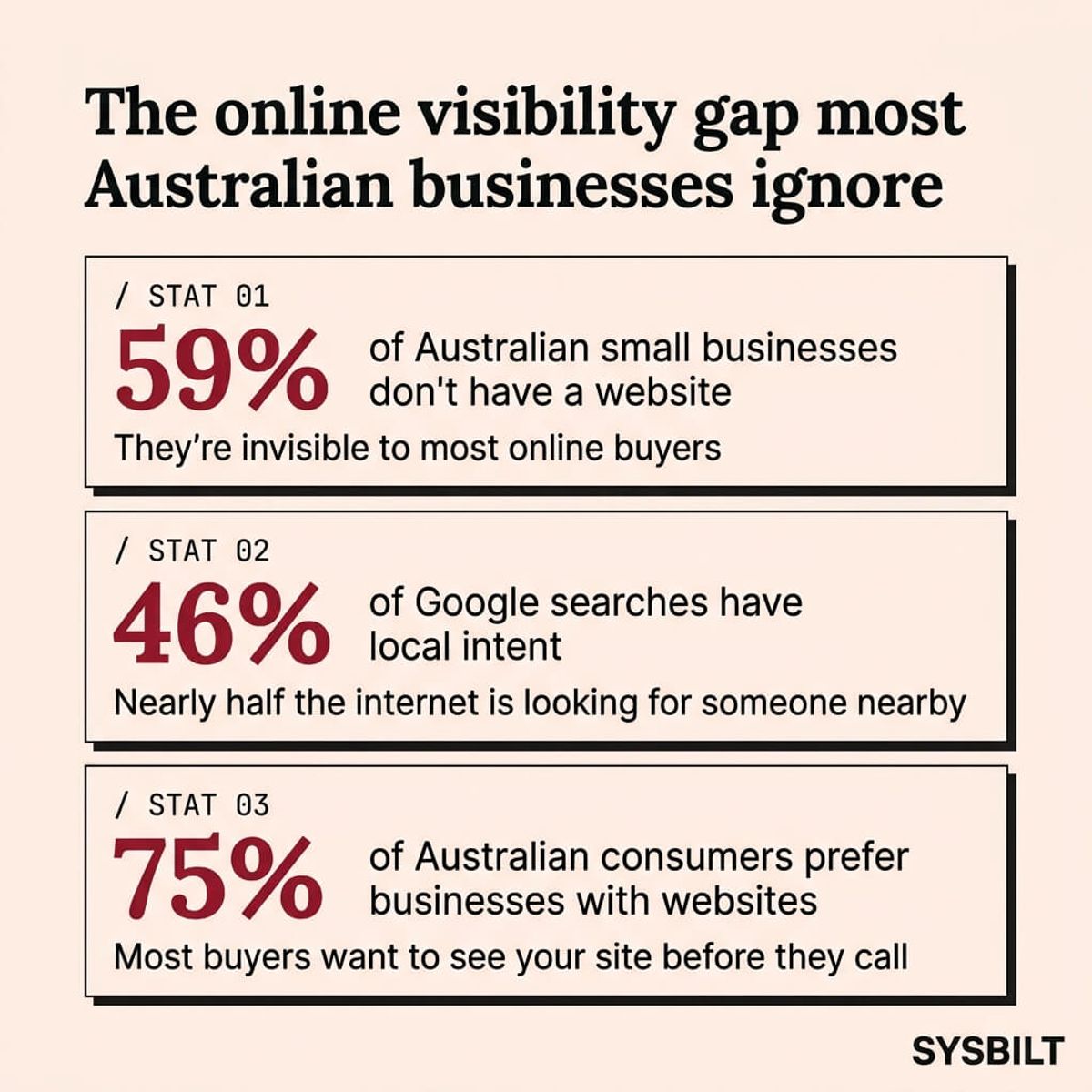
The data confirms how powerful that visibility is. 46% of all Google searches have local intent (BrightLocal, 2025), which means nearly half the internet is looking for someone nearby right now. Service businesses see a 10–15% click-to-call rate from GBP viewers (WebFX, 2026). Customers are 2.7x more likely to consider a business reputable when the profile is complete, and 70% more likely to visit (BrightLocal, 2025). A well-maintained GBP puts you directly in front of people who are actively ready to spend money.
But GBP has hard limits that most owners don't think about until those limits cost them a job. It can't explain your services in any real depth, it can't showcase your past work, and it can't walk a potential client through your process. Most critically, it can't capture lead information when you're unavailable. If someone searches at 9pm on a Tuesday and you don't answer the phone, that lead is gone. They hit the back button and call the next result. GBP gives you visibility, but it doesn't give you a safety net for the leads you can't catch in real time.
What Your Website Does That Google Business Profile Can't
Your website handles the half of the equation that GBP leaves wide open: trust, depth, and lead capture. It's where someone goes to verify that you're legitimate, professional, and worth their time before they pick up the phone. Service pages, client reviews shown in context, project photos, case studies, and a booking form all live here. A well-built website does the convincing on your behalf, even while you sleep.
The numbers make the case clearly. 75% of Australian consumers prefer to purchase from businesses that have websites (GoDaddy Australia, 2024). It's not just consumer preference either, it directly affects your search rankings. 85% of businesses sitting in the top three Google positions have websites linked on their profiles (Starfish Reviews, 2025). Your website isn't just a trust signal for potential customers, it's a trust signal for Google's algorithm too.
In practical terms, your website is where you earn the right to a phone call. Someone who clicks through from your GBP and lands on a professional site with real work examples and a clear contact option is far more likely to reach out than someone who only sees a basic listing with no supporting information.
Here's where the real advantage sits. A website captures lead details even when you can't pick up the phone. A contact form, a booking widget, or a simple enquiry page means someone can reach you at 10pm on a Sunday and their details land in your inbox, ready for a Monday morning follow-up. Without a website, that lead vanishes into thin air. In Australia, 59% of businesses don't have a website at all (GoDaddy Australia, 2024). If you have one that actually works, you're ahead of more than half your competition before you spend a single dollar on advertising.
The Real Cost of Choosing One Over the Other
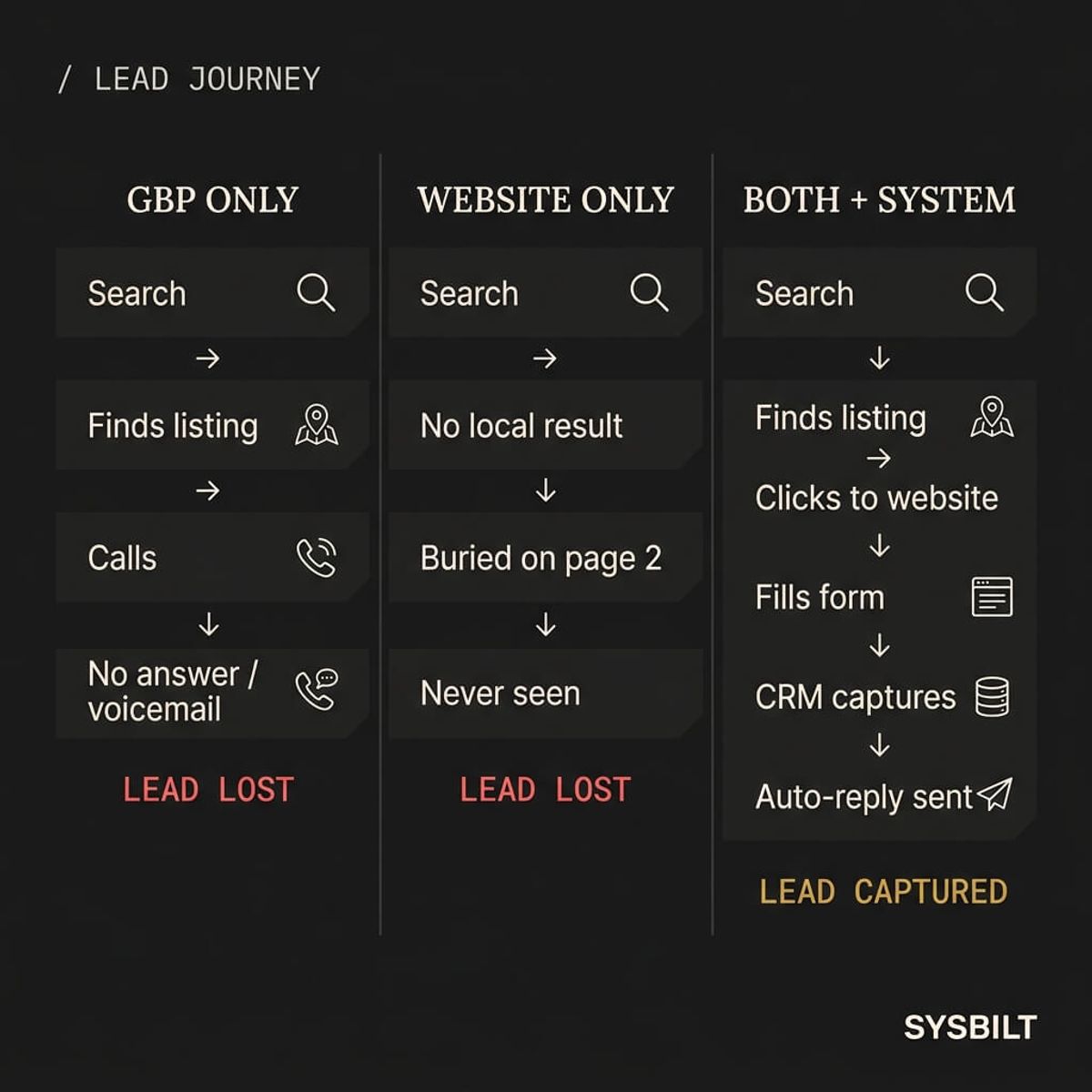
The easiest way to understand the gap is to picture three real scenarios.
GBP only: A potential customer searches "plumber near me" at 8pm. They find your listing, tap call, and you don't answer because you're at dinner with your family. They hang up, hit the back button, and call the next listing. You never knew they existed. No record of the call, no details, no second chance.
Website only: You've invested in a professional site with service pages, a portfolio, and a contact form. But you haven't claimed your Google Business Profile. When someone searches your service category on Google Maps, you don't show up at all. Your website sits somewhere on page two of organic results, buried beneath businesses that have both a GBP and a website working together. The site looks great, but nobody sees it when they're searching locally.
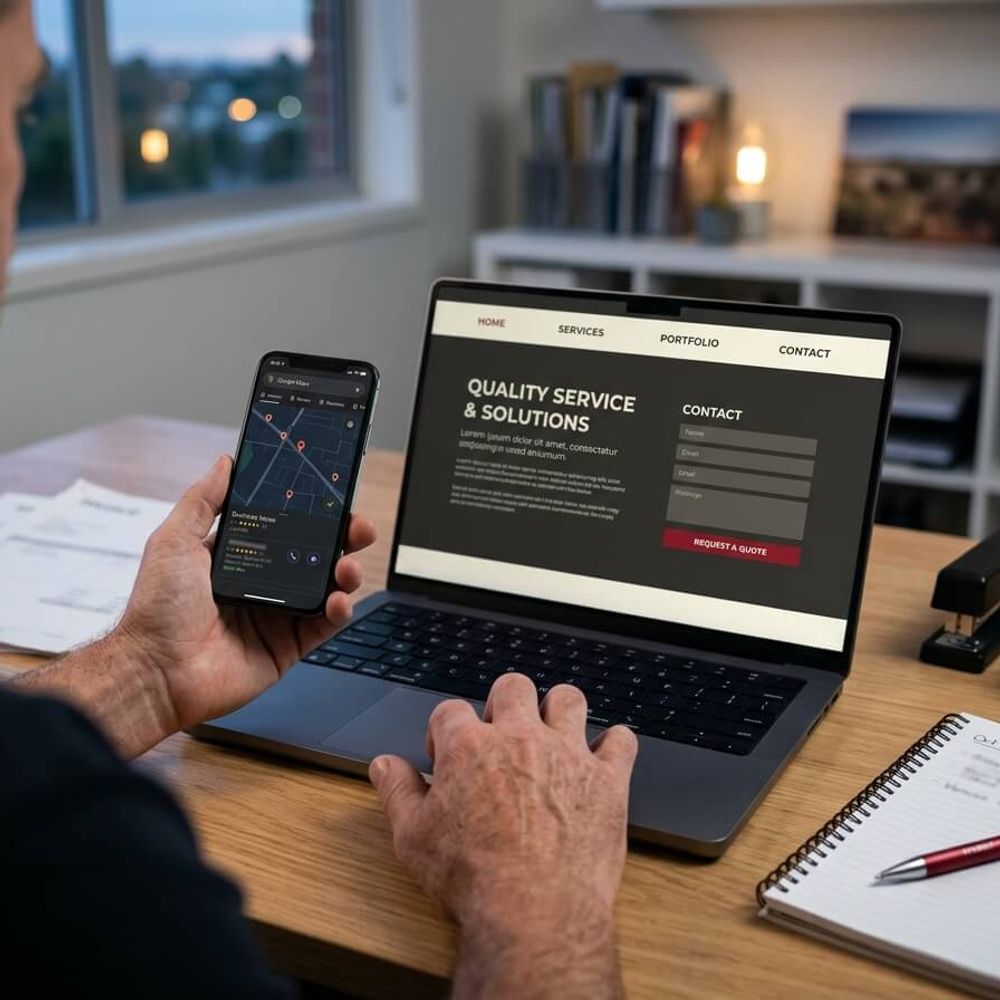
Both, connected: The customer finds your listing on Maps. They tap through to your website, read your services page, check your reviews, and fill out the enquiry form. Your CRM captures their details instantly with a timestamp and source tag. An automated reply goes out within seconds confirming you received the request and will be in touch. You call them the next morning and close the job.
The difference between scenario one and scenario three isn't a bigger marketing budget. It's whether the tools you already have are connected to each other. Every lead that finds your GBP but can't find your website is a lead your competitor closes instead. Every website without a GBP is a shopfront on a street with no sign outside.
What to Set Up First (A Practical Sequence for Australian Businesses)
If you're starting from scratch, here's the order that makes the most of a limited budget.
Step 1: Claim your Google Business Profile. It's free, it takes less than an hour to set up, and it can give you local visibility within days. Fill every field completely: business hours, service list, photos of your actual work (not stock images), and a business description that sounds like you instead of a generic template. A complete profile is the minimum bar for showing up in local search results.
Step 2: Build a website. It doesn't need to be complex or expensive. Even a focused five-page site changes the equation entirely. You need a homepage, a services page, an about page, a contact page with a form that actually works, and at least one page showing your completed work or client results. The goal isn't to win design awards. The goal is to give the person who found you on Maps a reason to trust you and a way to reach you that doesn't depend on you picking up the phone at that exact moment.
Step 3: Connect them. Add your website link to your GBP. Make sure your business name, address, and phone number match identically on both, character for character, because inconsistencies hurt your local rankings. Set up your contact form to feed directly into a CRM so every enquiry is logged, tracked, and followed up without relying on memory. If you want a website that actually captures leads and connects them into a system that handles follow-up automatically, we build exactly that.
The sequence matters because each step multiplies the value of the one before it. A GBP without a website gets you found but loses the leads who want more information before they commit. A website without a GBP gets you trusted but nobody finds you when they're searching locally. Both, connected to a follow-up system, means you get found, get trusted, and make sure the lead actually turns into a conversation.
The Step Most Businesses Skip (Connecting Both to a System)
This is where the real money leaks out. Most businesses set up their GBP and build a website, then stop there. The two tools exist side by side but don't communicate with each other, and neither one connects to anything that handles what happens next.
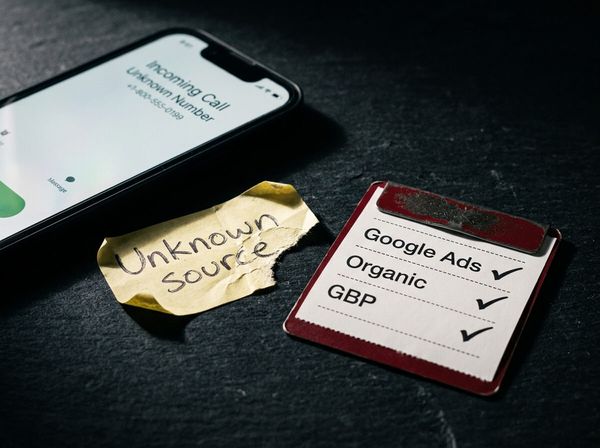
When a lead calls from your GBP and you miss the call, that enquiry disappears without a trace. When someone fills out your website's contact form and nobody replies for two or three days, the lead goes cold and calls a competitor. The tools did their job perfectly, but the gap between the tools is where the revenue quietly vanishes.
The fix isn't complicated, and it doesn't require enterprise-level software. Your website captures the lead's details through a form. Those details flow automatically into a CRM that logs every enquiry with a timestamp and source. An automated confirmation goes out immediately so the lead knows you received their request. You get a notification so you can follow up within hours instead of days. This is the difference between having two separate tools and having a connected system, and it's how your website feeds into CRM & Lead Tracking and Automation to make sure no lead falls through the cracks.
GBP handles the discovery, your website earns the trust, and a follow-up system makes sure nobody falls through the gap between finding you and becoming a client. That's not three separate tools doing three separate jobs. It's one connected system doing the only job that matters: turning local search visibility into paying clients.

WRITTEN BY
Felipe Chaparro
Systems Architect and Founder of SYSBILT. Felipe engineers custom automation, AI workflows, and performance web architectures for scaling Australian service businesses.