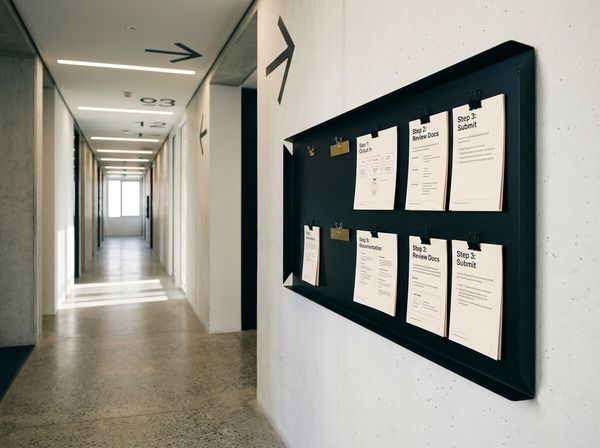
Your business can't grow without you in every decision. Here's how to systemise a business so it runs without you, from documentation to automation.
In this article
- //You Built the Business, Now the Business Runs Through You
- //What a Systemised Business Is Actually Worth
- //The Three Layers of Business Systemisation
- //Where to Start Without Turning It Into a Six-Month Project
- //What Changes When the Business Runs Without You
- //The Mistake That Kills Most Systemisation Attempts
You Built the Business, Now the Business Runs Through You
Twenty-nine percent of Australian business owners work more than 50 hours per week, compared to just 5% of employees (Vistaprint Australia research). That gap isn't because owners love overtime. It's because the business can't move without them.
You know the feeling. Your phone buzzes all day with questions only you can answer, and you can't take a week off because nobody knows how to handle the exceptions. Your team waits for you to approve, decide, or explain something before they can move forward.
This isn't a time management problem. It's a systems problem. The knowledge that keeps your business running lives in your head, and until it lives somewhere else, you're the bottleneck. The business grew because of you, and now it's stuck because of you.
"If your business depends on you, you don't own a business. You have a job."
That line cuts because it's true. You didn't set out to create a job for yourself, but that's what an unsystemised business becomes. The good news is that fixing it doesn't require a six-month overhaul. It requires three layers, built one at a time.
What a Systemised Business Is Actually Worth
Systemisation isn't just about getting your weekends back. It directly affects what your business is worth if you ever want to sell, bring in a partner, or step into a different role.
Businesses that can operate independently of their owner consistently command higher valuations than those that can't. Owner-dependent businesses attract valuation discounts of 10-25% at sale because buyers see the risk: if the owner leaves, the business falls apart. That discount can mean hundreds of thousands of dollars on a business turning over $2M to $5M.
But you don't need to be planning an exit for this to matter. A systemised business gives you capacity. You can take on more clients without working more hours, because your team handles delivery without checking with you at every step. A new hire gets productive in weeks instead of months because the knowledge isn't locked in one person's head. That's the difference between being self-employed and actually owning a business.
For a closer look at the financial cost of key-person dependency, including what it costs when critical staff leave an unsystemised business, see what happens if your best employee quits tomorrow.
The Three Layers of Business Systemisation
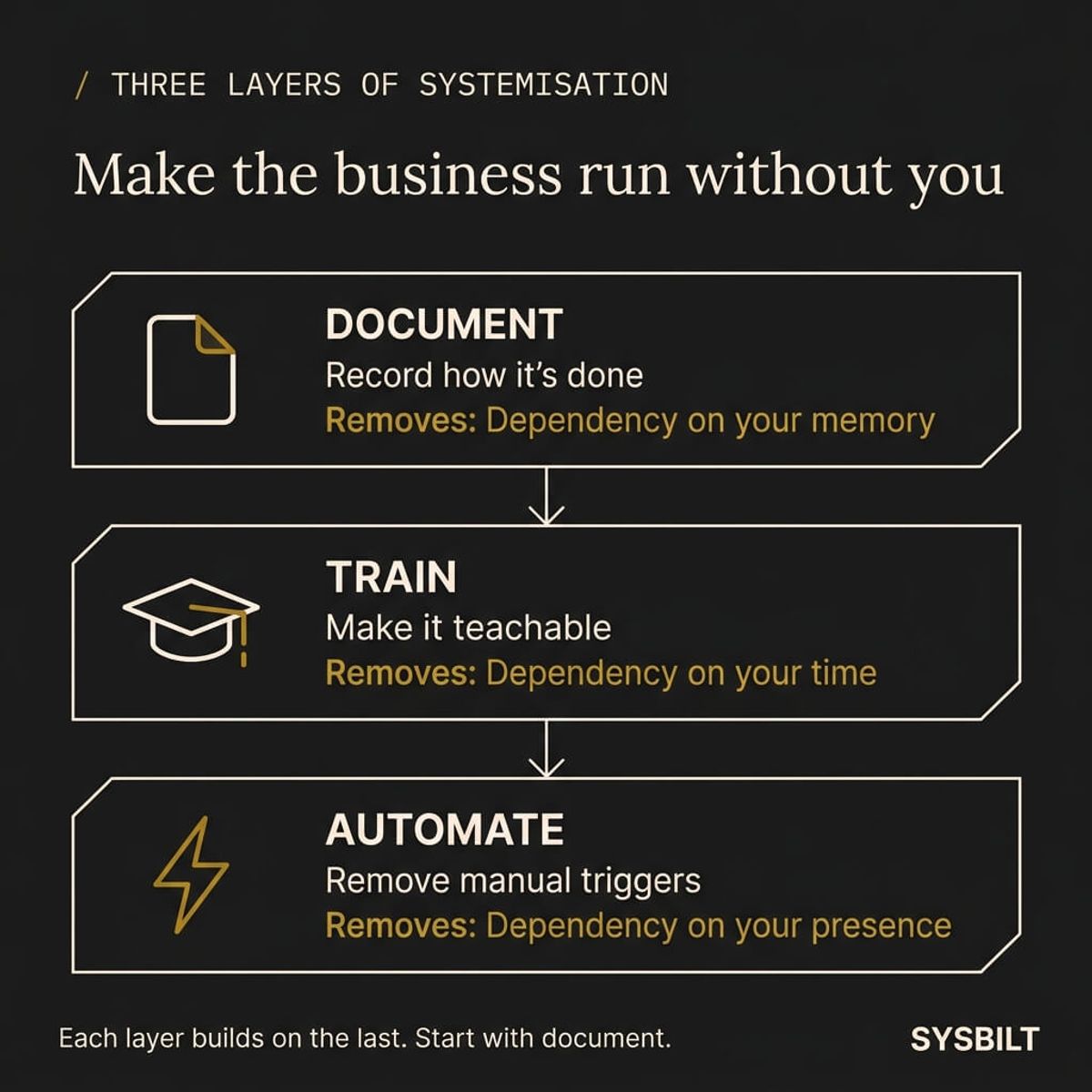
Most guides tell you to "document your processes" and leave it there. That's only the first step. Real systemisation has three layers, and each one removes a different dependency.
Layer 1: Document How It's Done
This is where you capture the knowledge that currently lives in your head or in the heads of your best people. Standard operating procedures, checklists, and visual walkthroughs that show exactly how a task gets done from start to finish.
The goal isn't a 200-page operations manual nobody reads. It's a library of short, specific instructions your team can pull up when they need them. Think screen recordings and step-by-step checklists rather than dense written documents. A 3-minute video of how you process a new client enquiry is worth more than a 10-page PDF.
What this removes: dependency on your memory. The knowledge exists outside your head, and your team can access it without interrupting you.
Layer 2: Make It Teachable
Documentation alone doesn't change behaviour. You need a training system that delivers the right information at the right time, without requiring you to sit in a room and explain it again.
Short video walkthroughs beat long workshops every time. A 3-minute screen recording of how to handle a refund is more useful than a 30-minute meeting about the returns policy. When you build a training library that lives where your team already works, new hires onboard themselves and existing staff stop asking you the same questions. The knowledge compounds because every process you record serves every future hire, not just the person sitting in front of you today.
What this removes: dependency on your teaching time. Your team learns without you being in the room.
Layer 3: Remove the Manual Triggers
The final layer is automation. Once a process is documented and your team knows how to follow it, you can start removing the manual handoffs that still require someone to remember, click, or chase.
A new client signs up and the onboarding sequence fires automatically. An invoice goes overdue and the follow-up email sends itself. A team member finishes a task and the next person in the chain gets notified without anyone sending a message. Each automation you build is one less thing that depends on someone's memory or availability. For a deeper look at where to start with automation, see the first three tasks every service business should automate.
What this removes: dependency on your daily presence. The system runs whether you're in the building or not.
Where to Start Without Turning It Into a Six-Month Project
The biggest reason systemisation stalls is scope. Owners try to document everything at once, burn out halfway through, and abandon the project entirely. The fix is starting small and building the habit.
Identify the five processes that would cause the most damage if you were unavailable for a week. These are usually the tasks that touch revenue or client delivery directly: quoting, onboarding, invoicing, quality checks, and client communication. Start there, not with the back office.
Use a screen recording tool or your phone camera, walk through the process as you do it, narrate what you're doing and why, and save it somewhere your team can actually find it. A shared drive nobody opens doesn't count. It needs to live where your team already works, whether that's your project management tool, your internal chat, or a dedicated knowledge base.
If you want a deeper look at making documentation stick, this post on writing processes your team will actually read covers the practical side in detail.
The goal for the first month isn't perfection. It's momentum. Five recorded processes in five weeks gives you a foundation you can build on, and it proves to your team that this is actually happening.
See how SYSBILT builds training systems that make your business run independently
What Changes When the Business Runs Without You
The first thing you'll notice isn't efficiency. It's silence. Your phone stops buzzing with questions your team can now answer themselves, and your inbox shrinks because the follow-ups and handoffs are running automatically. You get blocks of uninterrupted time that you haven't had in years.
Your team changes too. When people have clear processes and the training to follow them, they stop waiting for permission and start taking ownership. Decisions get made faster because the framework for making them already exists, and new hires get productive in weeks instead of months because the knowledge isn't locked inside one person's head.
And your business becomes something different entirely. It's no longer a job you can't quit. It's an asset that runs, grows, and holds its value whether you're in the room or not. If you ever want to step back, bring in a manager, or sell, the systems are already in place. The business doesn't fall apart without you because it was never built around you in the first place.
The Mistake That Kills Most Systemisation Attempts
The number one failure pattern isn't choosing the wrong tools or writing bad SOPs. It's trying to do everything at once. Owners get motivated, block out a weekend, and try to document 30 processes in one sitting. Two weeks later the project is dead and the half-finished documents sit in a folder nobody opens.
Approximately 60% of businesses in Australia fail within their first five years of operation (ABS via ASBFEO, 2025). While many factors contribute, a lack of repeatable, documented systems is consistently cited as a driver. The businesses that survive and scale are the ones that build their processes incrementally, not in a single heroic effort.
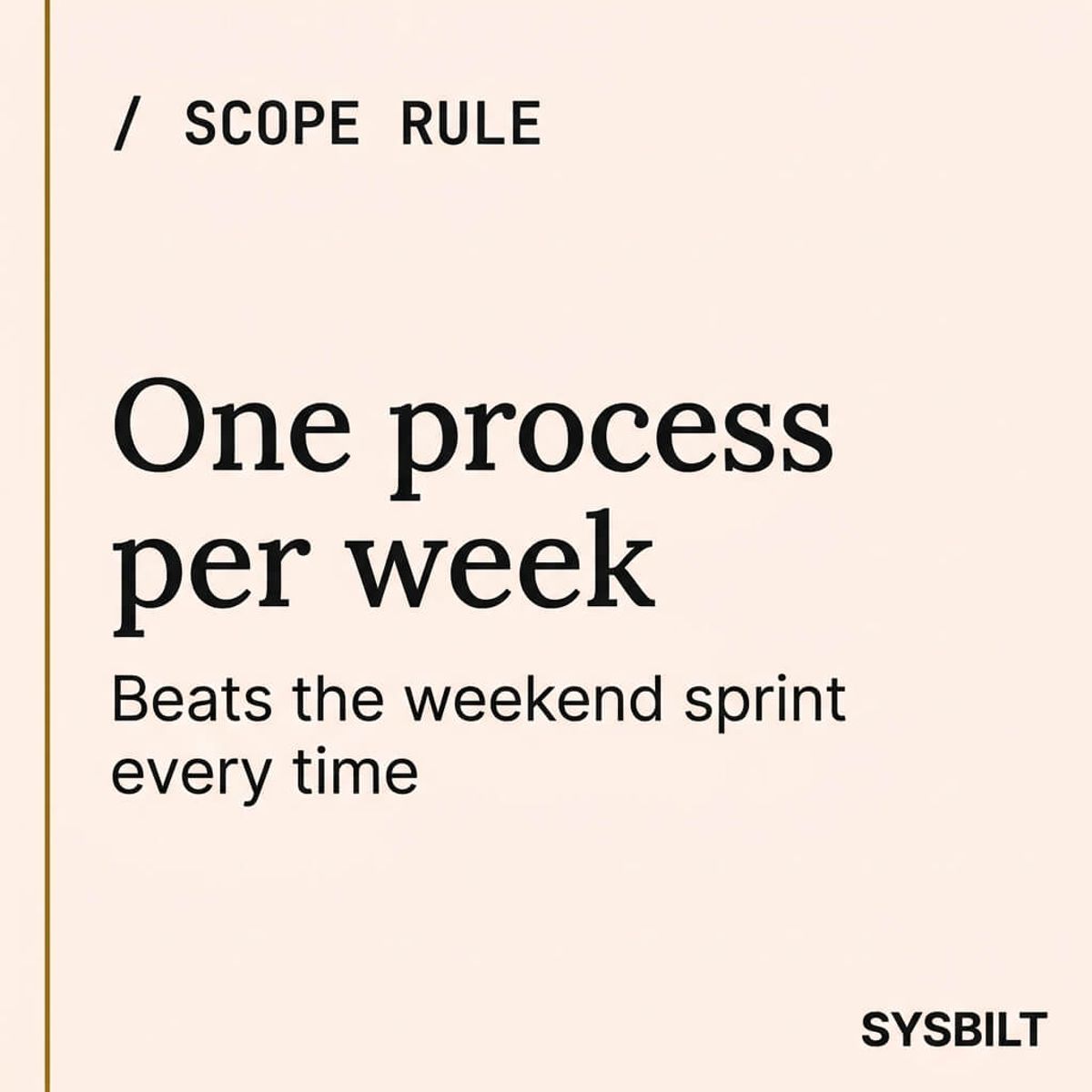
The fix is treating systemisation like a weekly habit, not a one-off project. One process per week. Start with what touches revenue and delivery. Build the training around it immediately so the documentation doesn't sit unused. Layer in automation where it makes sense, then move on to the next one.
Over six months, you'll have documented and systematised 25 or more core processes without ever taking a day off to do it. That's the difference between a systemisation project that dies in week two and one that actually transforms how your business operates.

WRITTEN BY
Felipe Chaparro
Systems Architect and Founder of SYSBILT. Felipe engineers custom automation, AI workflows, and performance web architectures for scaling Australian service businesses.