Your website looks fine but it doesn’t generate leads, learn when a custom coded website vs template builder is the right move.
In this article
If you’re searching custom coded website vs template builder, you’re probably not chasing a debate. You’re chasing enquiries, and you’re sick of a website that looks fine but stays quiet.
In this post we’ll give you a simple decision rule, then show you what changes when your website is built as a lead system instead of an online brochure.
The real cost isn’t the build, it’s the leads you never get
Most businesses do not lose money because they picked the “wrong” platform. They lose money because the website does not do its job.
That job is simple: turn the right visitors into calls, form submissions, and bookings, then make sure those enquiries do not disappear.
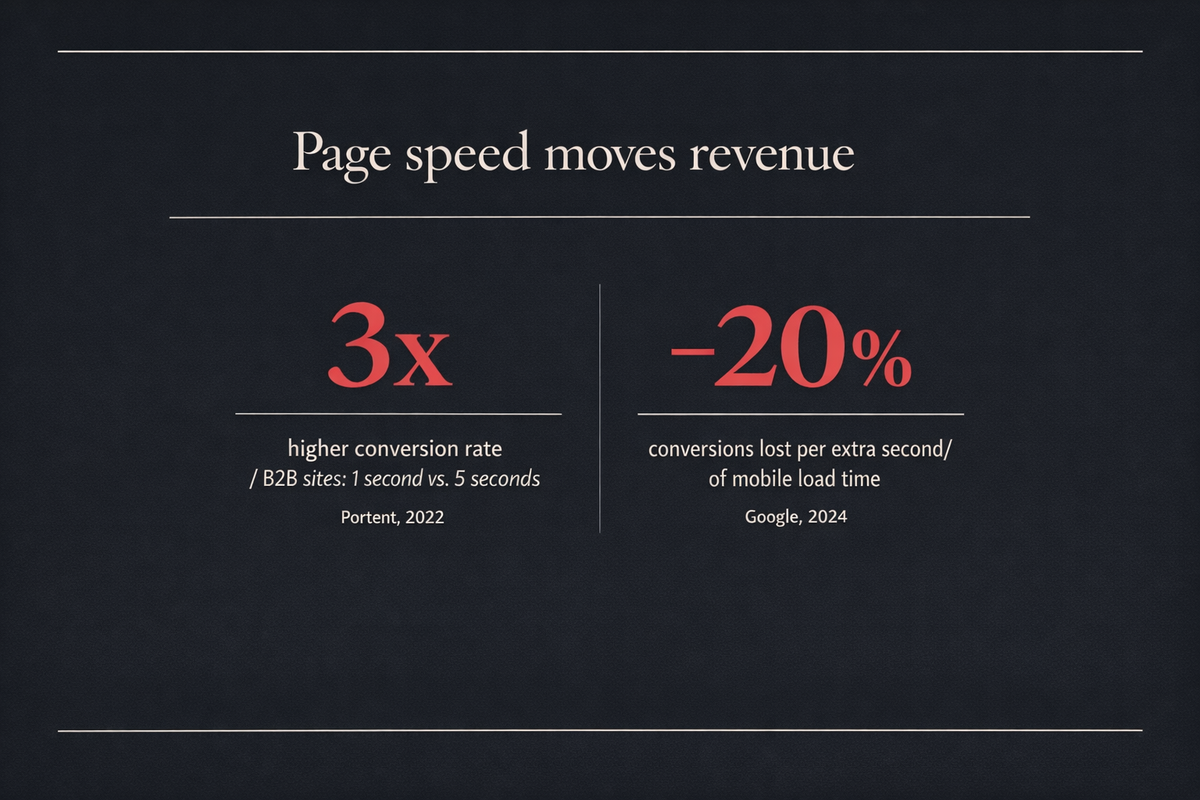
Here's the part most guides skip. A meaningful improvement in speed can move real revenue.
Portent Research found a B2B site loading in 1 second converts at three times the rate of one loading in 5 seconds (Portent, 2022). Google and Ipsos put it plainly: every one-second delay in mobile load time can cut conversions by up to 20% (Google, 2024). And the average mobile page still takes 8.6 seconds to load, even though 53% of visitors leave after just 3 seconds (WP Rocket / Tooltester, 2025).
That is why “it loads eventually” is not a harmless issue. Slow pages do not just annoy people, they change what they do next.
When a template builder is the right move, and when it isn’t
Template builders are not evil. For some businesses they are the right move.
A builder is usually a good fit if:
- You need a brochure site, and the goal is credibility, not lead volume.
- Your offer is stable, and you are not changing pages every month.
- You don’t need integrations, beyond basic forms and email notifications.
A builder usually becomes the wrong tool when:
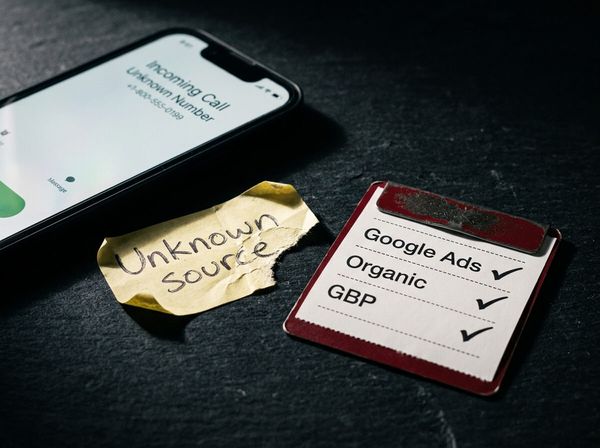
- You need reliable tracking, so you know what is driving enquiries.
- You need speed you can protect, especially on mobile.
- You need forms that behave like a system, not an email inbox.
- You want to connect leads into a pipeline, so follow-up is consistent.
Google makes it clear that speed and experience matter, and it measures that with Core Web Vitals.
You can rank with a builder, but you still have to win the click and convert the visitor once they land.
The five signs your website builder is costing you money
If any of these are true, your website might be “done”, but it is not working.
- 01Mobile load feels slow
- If it takes long enough for you to notice, it’s costing you.
- 02You can’t answer basic questions without guessing
- Which pages drive enquiries
- Which ads bring calls
- Which suburbs, services, or offers convert best
- 03Forms go to email and then disappear
- Enquiries land in an inbox, nobody owns them, and follow-up depends on memory.
- 04Missed calls become lost leads
- If someone calls once and you do not answer, there is no automatic second chance.
- 05Every improvement feels like a workaround
- Adding a new landing page, changing navigation, or improving performance should not feel risky.
This is the hidden cost of “cheap”. Not the upfront price, the ongoing leak.
For reference, a professionally built custom-coded website in Australia typically represents a meaningful upfront investment (WP Creative).
DIY website builders carry a low annual subscription, freelancers a mid-range build cost, and agencies a higher upfront investment (Strong Digital, 22 Dec 2025).
The right question is not “what is cheaper”, it is “what does it cost me if this site keeps leaking leads for another 12 months”.
What a business website system looks like in plain English
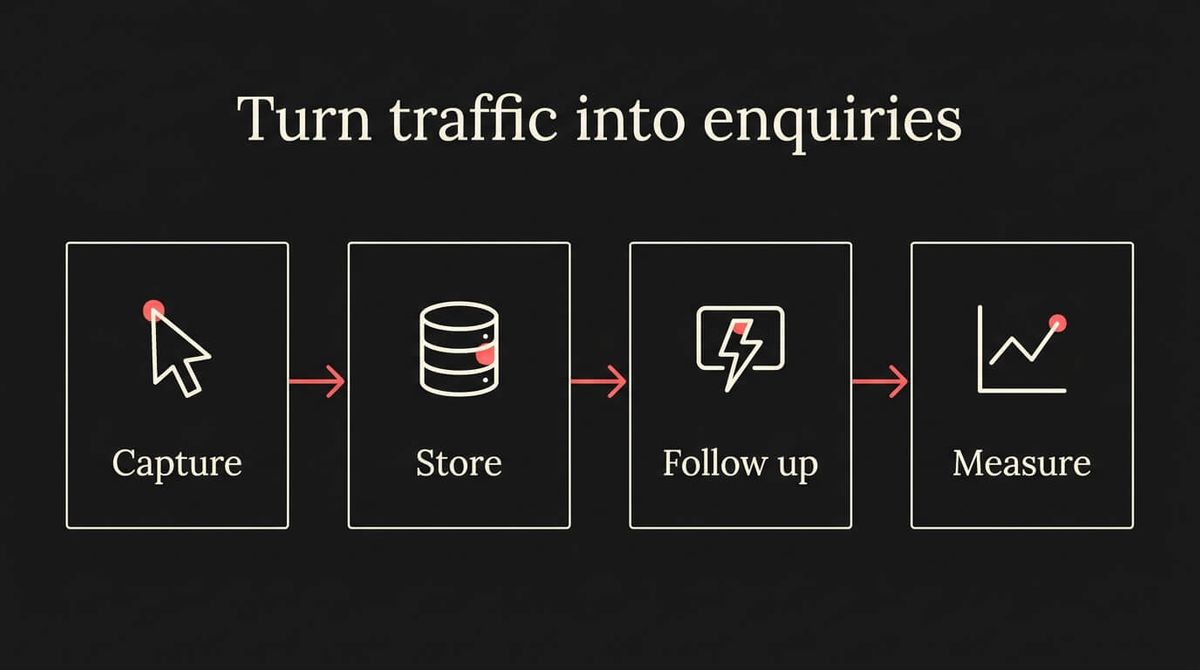
A proper website system is not “custom for the sake of it”. It is built so you can capture, track, and convert enquiries reliably.
It looks like this:
- Capture: clear pages that match what people actually search, with one obvious next step.
- Store: every enquiry goes into a CRM, not just an inbox, so nothing disappears.
- Follow up: simple automation responds fast, even when you’re busy.
- Measure: one weekly check that tells you what is working and what is not.
Independent research consistently shows that improving page load time from 5 seconds to 1 second can triple conversion rates for B2B service sites. Not a marginal gain, but a structural one (Portent, 2022).
If your website is meant to help you win work, this is where we’d start. Not with a design debate, with a system that turns attention into enquiries.
What to do next
If your website is already generating steady enquiries and you can track them end to end, you might not need a rebuild. You might just need small improvements and better tracking.
When you're ready to treat the site as the front of the system, start with how we build websites that win work.
If it is quiet, if enquiries get lost, or if you do not know what is driving calls, a custom build is often less about “better design” and more about control. Control over speed, tracking, forms, and how leads flow into your follow-up.

WRITTEN BY
Felipe Chaparro
Systems Architect and Founder of SYSBILT. Felipe engineers custom automation, AI workflows, and performance web architectures for scaling Australian service businesses.