In this tool
- //What it is
- //How it helps your business
- //What it can actually do
- //What it connects to
- //How it makes you more money
- //How it saves you money
- //How it lowers your stress
- //Where it falls down, and what it can cost you
- //When to try it, pay for it, or build it in
- //Chat or API, in plain terms
- //How we do it
// What it is
HubSpot is a customer relationship management platform that pulls your sales, marketing, and customer service into one shared database. It replaces the messy spreadsheets and disjointed inboxes that many growing businesses use to track their leads. For a business owner who wants to know exactly where every quote and conversation sits, it creates a single, reliable source of truth.
// How it helps your business
- →Tracks every email, meeting, and phone call against a client's record automatically
- →Gives you a visual pipeline so you know exactly which deals are waiting on a follow-up
- →Replaces separate email marketing and forms tools with one connected system
- →Flags which leads are actually opening your emails and visiting your website
//What it can actually do
It takes the chaos of tracking clients across sticky notes and inboxes and forces it into a tidy structure.
- →It builds the timeline. Every time a prospect fills out a form, opens a quote, or replies to an email, the activity is logged on their contact card. Anyone on your team can read the history before they pick up the phone.
- →It visualises the money. The visual deal pipeline shows you exactly what is sitting in negotiation, what is waiting for a signature, and what you have closed this month, rather than you guessing from a spreadsheet.
- →It automates the follow-up. On the paid tiers, you can build sequences that automatically chase a cold lead or trigger a welcome email when a deal is won, removing the manual admin from your sales process.
//What it connects to
It is built to be the central hub of your business, so its job is connecting to everything else you run.
- →The free tier gives you the core database, basic forms, a single deal pipeline, and light email marketing, but brands your outward-facing assets.
- →The paid upgrades remove the branding and unlock the heavy automation, custom reporting, and AI agents that actively work your pipeline.
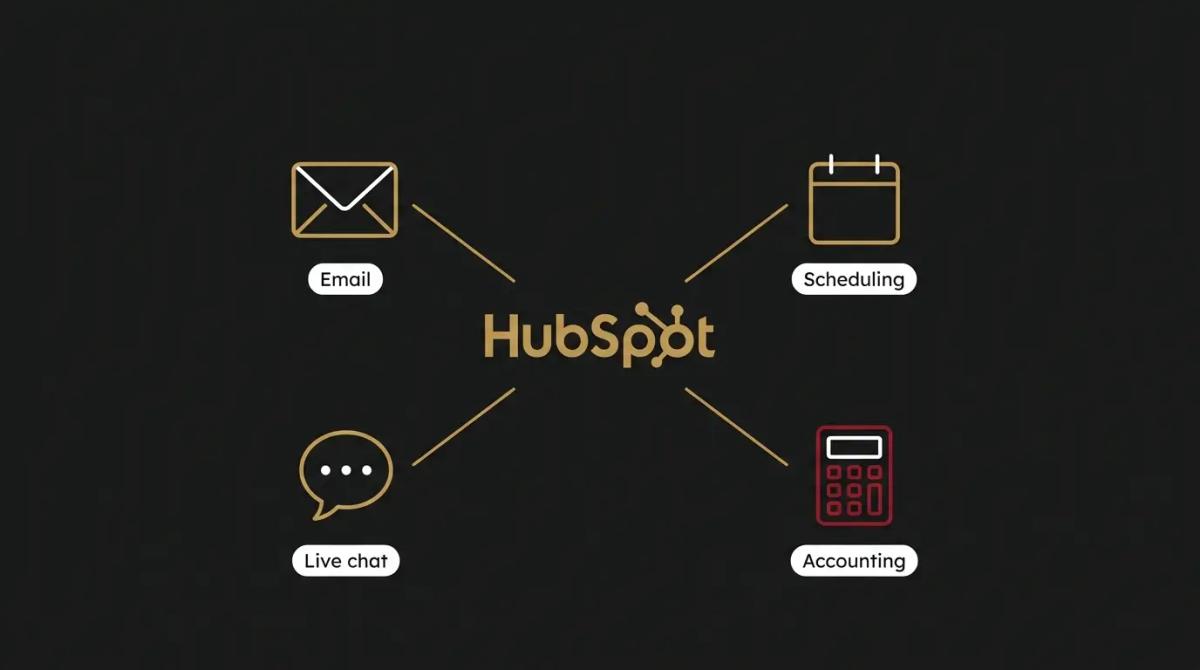
- →Through its massive app marketplace, it links natively to almost any accounting, scheduling, or communication software you already use.
//How it makes you more money
- →You stop dropping leads. A lot of revenue is lost simply because nobody remembered to follow up on a discovery call. A structured pipeline with automated task reminders ensures every warm lead gets chased until they buy or decline.
- →You know who is actually interested. When a prospect opens your proposal three times in an hour, the system pings you. Calling a lead exactly when they are reading your pricing converts far better than a scheduled check-in on a Friday.
//How it saves you money
- →You can retire a dozen smaller subscriptions. Because it handles email marketing, meeting links, live chat, and landing pages natively, you can often cancel your separate scheduling apps and email newsletter tools.
- →Fewer hours wasted chasing context. The time your team spends asking each other what happened on the last client call disappears when every piece of context is logged in one shared record.
//How it lowers your stress
- →The sales forecast becomes a fact, not a guess. When every deal is tracked in stages, you stop lying awake wondering if you will make payroll next month. You can see exactly what revenue is likely to land.
- →Handovers stop being dangerous. If a key salesperson takes leave or quits, they do not take their client knowledge with them. The entire history of their accounts lives in the company database, so the next person can pick up exactly where they left off.
//Where it falls down, and what it can cost you
It is the standard for a reason, but the billing model is built to squeeze you as you grow.
- →The automation paywall is a cliff. The free tier is generous for data storage, but the second you want a three-step automated email sequence or a custom deal trigger, you are forced onto a paid tier that is rarely cheap. We have found many businesses hit this wall fast.
- →Bad data breaks the whole machine. It relies entirely on what you feed it. If your team refuses to log their calls or moves deals lazily, the reporting becomes fiction and the AI features just amplify the mess. It demands operational discipline.
- →The pricing scales aggressively. As your contact list grows and you add more sales seats, the monthly subscription compounds. For a growing business, it quickly becomes one of the heaviest lines on the software budget.
//When to try it, pay for it, or build it in
Start with the free tier to get your contacts out of spreadsheets and into a real database, and see if your team actually uses the pipeline. Pay for the upgrade when you need to automate your sales follow-ups or run custom reports across your revenue. Bring in outside help to build it in when your data is messy, you need to map complex custom deal stages, or you want it wired directly into your accounting software to trigger invoices automatically.
//Chat or API, in plain terms
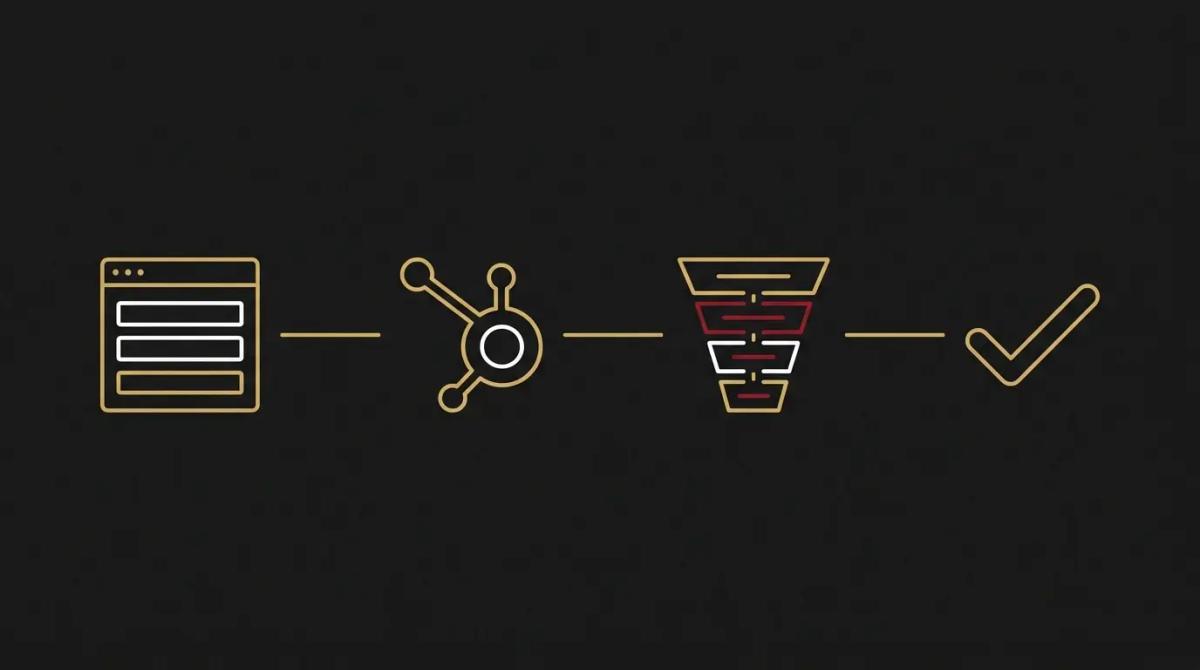
The visual dashboard is where your team logs calls and moves deals. The API is what we use to connect it to the rest of the internet, so a form filled out on a custom website flows straight into your database without a human touching it.
//How we do it
We use HubSpot as the brain of a sales operation. We do not just import your messy spreadsheet, we clean the data first. We map out your actual sales process and build the deal pipelines to match how you sell, not how the software thinks you should. Crucially, we build the automation so the CRM works for you, triggering the task reminders, logging the emails, and setting the follow-ups, so your team spends their time talking to clients rather than updating fields manually.

WRITTEN BY
Felipe Chaparro
Systems Architect and Founder of SYSBILT. Felipe engineers custom automation, AI workflows, and performance web architectures for scaling Australian service businesses.