Missing leads because you're too busy to answer the phone? Learn how to stop missing leads with a system that follows up automatically.
In this article
You're not losing leads because you don't care about your business. You're losing them because your hands are full, your phone's in your pocket, and there's nothing catching enquiries while you do the actual work. Every missed call, every unanswered form submission, and every enquiry that sits in your inbox for a day is revenue walking to someone else.
This post covers how to stop missing leads when you are busy, not by working harder or checking your phone more often, but by building a simple system that captures, acknowledges, and follows up on every enquiry automatically.
The Real Reason You're Losing Leads
The advice you'll find online is always the same: respond faster, be more disciplined, check your inbox more often. That advice assumes you're sitting at a desk with nothing else to do.
Think about your actual day. You're with a client, driving between appointments, or doing the work that pays the bills. You can't drop everything to answer every call, and you shouldn't have to. The real question isn't "how do I respond faster?" It's "how does my business respond when I physically can't?"
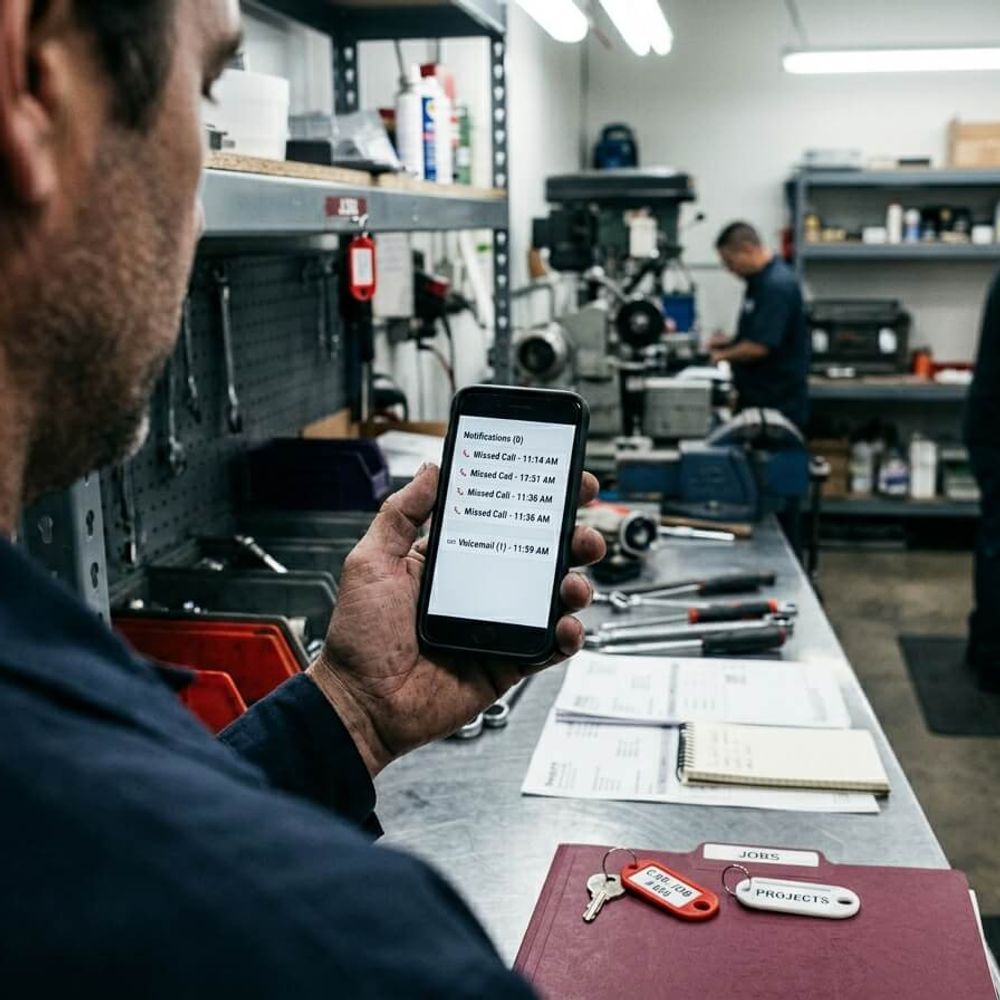
62% of calls to growing businesses go unanswered, and 85% of those callers never ring back (Trillet/Aira, 2024). That's not a motivation problem. It's a structural one. Your website might be generating genuine interest, but if there's nothing between the enquiry and your personal attention, every lead depends on you being free at the exact moment they reach out.
What Happens in the Five Minutes After Someone Enquires
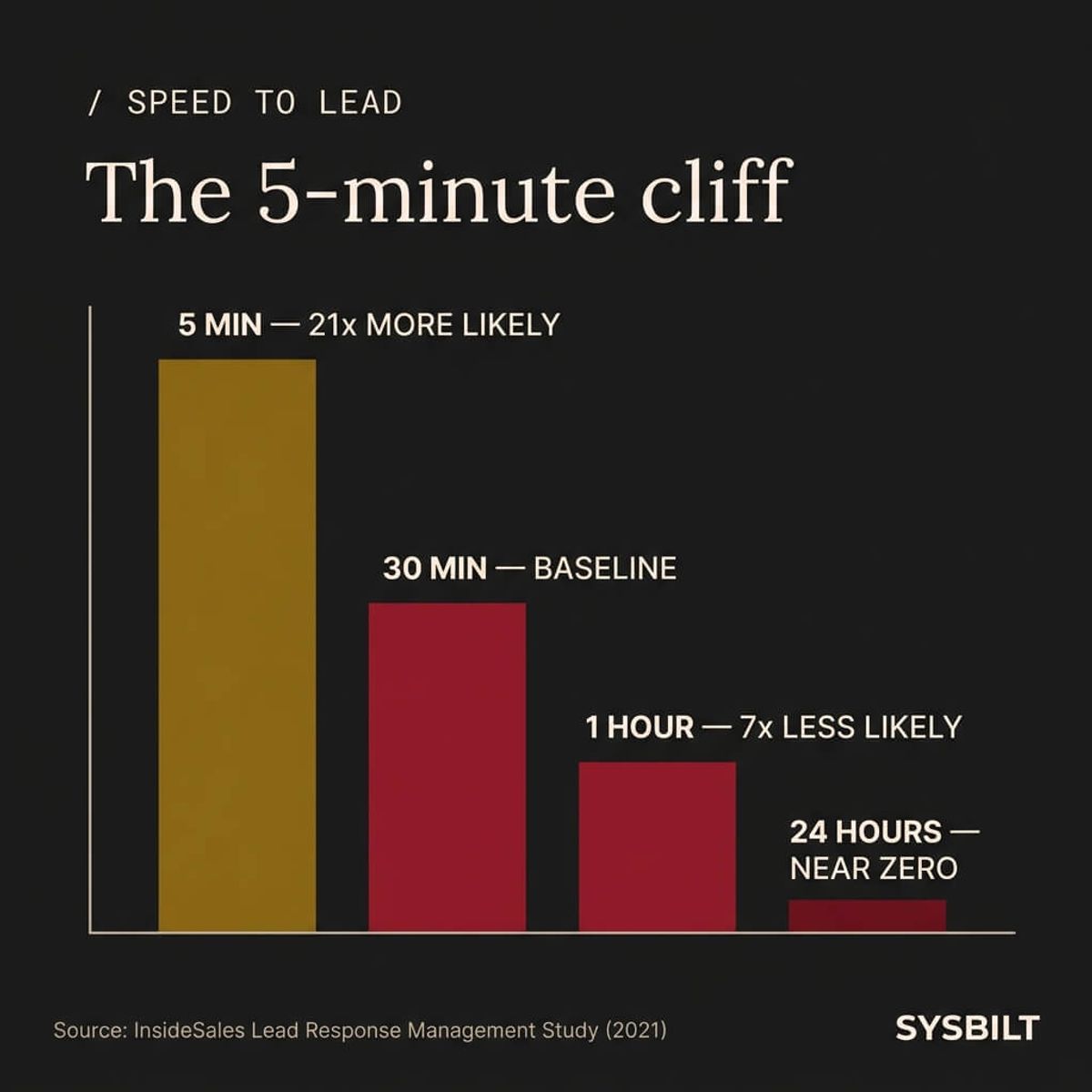
The data on response time is clear. Responding within five minutes makes you 21 times more likely to qualify a lead compared to waiting 30 minutes (InsideSales.com, 2021). After an hour, you're seven times less likely to qualify them at all. After 24 hours, the odds drop to near zero.
That five-minute window isn't just theory. It's the difference between converting a warm lead and chasing a cold one.
Now consider this: the average business takes over 29 hours to respond, and 63% never respond at all (RevenueHero, 2024). Your competitor who texts back in two minutes wins the job you paid to attract.
"Diligent follow-up and follow-through will set you apart from the crowd and communicate excellence."
78% of customers buy from the first business that responds to their enquiry (Teamgate, 2025). It's not about being the best option on paper. It's about being the first to show up.
The Three Leaks That Cost You the Most
Most businesses don't have one lead problem. They have three, and together they create a compounding cost that gets worse the busier you get.
Leak 1: The missed call. Someone finds you online, calls at 2 PM, and you're with a client. They hang up and call the next business on Google. You had that lead for about 30 seconds before it walked out the door. This happens multiple times a week for most service businesses, and each missed call is real revenue gone.
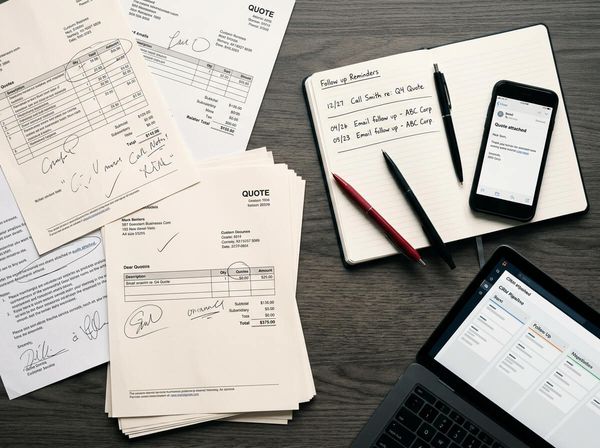
Leak 2: The slow quote. You answered the call, had a great conversation, and said you'd send a quote by end of day. Three days later it's still in your drafts and the prospect has moved on. If this one sounds familiar, automating your quote follow-up can close that gap permanently.
Leak 3: The silent past client. You finished a job six months ago. The client was happy. But you never followed up, and now they've forgotten your name. When their neighbour asks for a recommendation, someone else gets the referral. That's not just a lost lead, it's a lost referral pipeline that compounds over years.
Each leak feeds the next. A missed call becomes a cold lead, a cold lead gets a rushed quote, and a rushed quote gets no follow-up. By the time you notice the pattern, months of potential revenue have quietly slipped through.
How to Stop Missing Leads Without Working Harder
The fix isn't more discipline or a faster phone hand. It's a three-step system that runs whether you're free or not.
Step 1: Capture. Every enquiry, whether it comes from your website form, a phone call, or a social media message, lands in one place instantly. Not your inbox, not a sticky note, not a text thread you'll forget about. A CRM logs the lead with a timestamp, source, and contact details before you even know they reached out. No more scrolling through call logs trying to remember who rang yesterday.
Step 2: Acknowledge. Within seconds of that enquiry, the system sends an automatic reply. An SMS, an email, or both. Something simple: "Thanks for getting in touch. We've received your details and someone will be in contact within the hour." That one message tells the prospect they haven't been ignored, and it buys you the time to finish what you're doing.
Step 3: Route. The system notifies the right person, schedules a follow-up task, and tags the lead by source and service type. If you're a one-person operation, it queues everything so you see a clear action list when you're free, not a mess of missed calls and half-remembered conversations.
In practice, this looks like a business owner finishing a client meeting and seeing an SMS summary of two new leads already acknowledged. Or a receptionist spotting a qualified lead card in the pipeline between appointments. The system handles the urgency so you don't have to.
See how we build this system for Australian businesses
What Changes When You Stop Doing Follow-Up Manually
Picture this: it's Tuesday, you open your phone at lunch, and three leads came in while you were working. All three received an instant acknowledgement. One has already booked a discovery call through your calendar link. Another replied to the auto-text with project details. The third is tagged and queued for your afternoon callback. You didn't touch any of them.
That's what happens when capture, acknowledgement, and routing run automatically instead of depending on your memory. You stop losing leads to silence, you stop forgetting to follow up on quotes, and you stop relying on your phone being within arm's reach every minute of the day.
Over six months, that system doesn't just save time. It builds a pipeline you can actually see and manage. You know where your leads come from, which ones convert, and where the bottlenecks sit. Your marketing spend starts working harder because the leads it generates don't vanish into thin air.
The businesses that grow consistently aren't always the ones with the biggest ad budgets. They're the ones that don't let good leads die in the gap between enquiry and response. A proper CRM and automation setup closes that gap permanently, and it costs far less than the revenue you're currently leaving on the table.
If this sounds like your business, book a call and we'll walk you through how this applies to your situation.

WRITTEN BY
Felipe Chaparro
Systems Architect and Founder of SYSBILT. Felipe engineers custom automation, AI workflows, and performance web architectures for scaling Australian service businesses.